The Noble Family
The blessed family of Lady Fatemeh Zahra (sa), whose connections form the foundation of her identity and legacy in Islamic history.
Her Blessed Parents

Prophet Muhammad (pbuh)
The Messenger of Allah and the final Prophet in Islam. In both Sunni and Shi‘i narrations he showed exceptional love and honor to Lady Fatemeh (sa), stood for her when she entered, and called her “a part of me.”
The Prophet (pbuh) would stand up to greet her when she entered, demonstrating her elevated status. He declared, "Fatemeh is a part of me; whoever pleases her pleases me, and whoever angers her angers me."

Lady Khadija (sa)
Lady Khadija al-Kubra (sa), the first believer in the Prophet’s mission and one of the greatest women of Islam, supported the early Muslim community with her faith, wisdom, and wealth. She passed away in the Year of Sorrow, but her truthfulness, generosity, and courage remained deeply woven into Fatemeh’s life.
Lady Khadija (sa) passed away when Lady Fatemeh (sa) was only five years old, but her values of generosity, courage, and devotion deeply influenced her daughter. The Prophet (pbuh) often spoke of Lady Khadija's virtues and merits.
"No one has been given in marriage better than Fatemeh, for her father is the Messenger of Allah, her husband is Ali, and her sons are Hasan and Husayn."
Her Noble Husband
Imam Ali ibn Abi Talib (as)
Imam Ali ibn Abi Talib (as) — cousin of the Prophet, first Imam in Twelver Shi‘i Islam, and husband of Lady Fatemeh (sa). Their marriage in 2 AH is remembered as a model of simplicity, devotion, mutual dignity, and service to Allah.
Their marriage was divinely ordained and took place in 2 AH. It represents the ideal Islamic marriage, built on mutual respect, love, and shared devotion to Allah. Despite living in poverty, they created a household of love, knowledge, and spirituality.
Imam Ali (as) was deeply devoted to Lady Fatemeh (sa) and expressed immense grief after her passing. He fulfilled her wishes for a secret burial and continued to raise their children with the values they both cherished.
Her Blessed Children

Imam Hasan (as)
The second Imam in Twelver Shi‘i Islam, known for his forbearance, generosity, and peacemaking wisdom.
Born in 3 AH, he was deeply loved by the Prophet who declared, "Hasan and Husayn are the leaders of the youth of Paradise."

Imam Husayn (as)
The third Imam, whose stand at Karbala became the enduring standard of sacrifice, dignity, and resistance to oppression.
Born in 4 AH, his martyrdom became a defining moment in Islamic history, embodying the principles of justice and truth.

Lady Zainab (sa)
A daughter of profound eloquence and steadfastness whose voice helped preserve the message of Karbala.
Born in 5 AH, she inherited her mother's strength and her father's eloquence.

Lady Umm Kulthum (sa)
Remembered with love in the blessed household; early reports differ on some details, but her place in the family’s memory remains honored.
She was present at Karbala alongside her sister Zainab and played a role in preserving the message of Imam Husayn (as).
The Blessed Household
The children of Lady Fatemeh (sa) and Imam Ali (as) form the core of Ahlulbayt (the Prophet's household), who are revered in Islamic tradition for their piety, knowledge, and sacrifice.
Through them, Lady Fatemeh's lineage continued, and her teachings and values were preserved and passed down through generations. Her descendants, known as "Sayyids" or "Sharifs," continue to be respected throughout the Muslim world.
Historical Notes on the Prophet’s Children
Early reports differ on some family details, so this section uses careful wording rather than presenting disputed points as settled.
Children of Lady Khadija (sa)
Classical reports agree that al-Qasim and Abd Allah were sons of the Prophet (pbuh&hp) and Lady Khadija (sa) who died young. In many Twelver Shi‘i presentations, Lady Fatemeh (sa) is highlighted as the only surviving daughter of the Prophet and Khadija. Some wider historical reports also mention Zaynab, Ruqayyah, and Umm Kulthum; scholars discuss these reports in different ways.
- al-Qasim — died in childhood
- Abd Allah (also called al-Tayyib / al-Tahir in some reports) — died in childhood
- Lady Fatemeh al-Zahra (sa) — the most enduring blessed progeny of the Prophet
Other Reported Children
Ibrahim, the Prophet’s son through Mariyah al-Qibtiyyah, also died in infancy. Because the historical record contains differing narrations, this website avoids categorical claims beyond what is broadly established in Shi‘i reference works.
- Ibrahim ibn Muhammad — son of the Prophet through Mariyah al-Qibtiyyah; died in infancy
- Reports about Zaynab, Ruqayyah, and Umm Kulthum are discussed differently across early sources
Family Connections
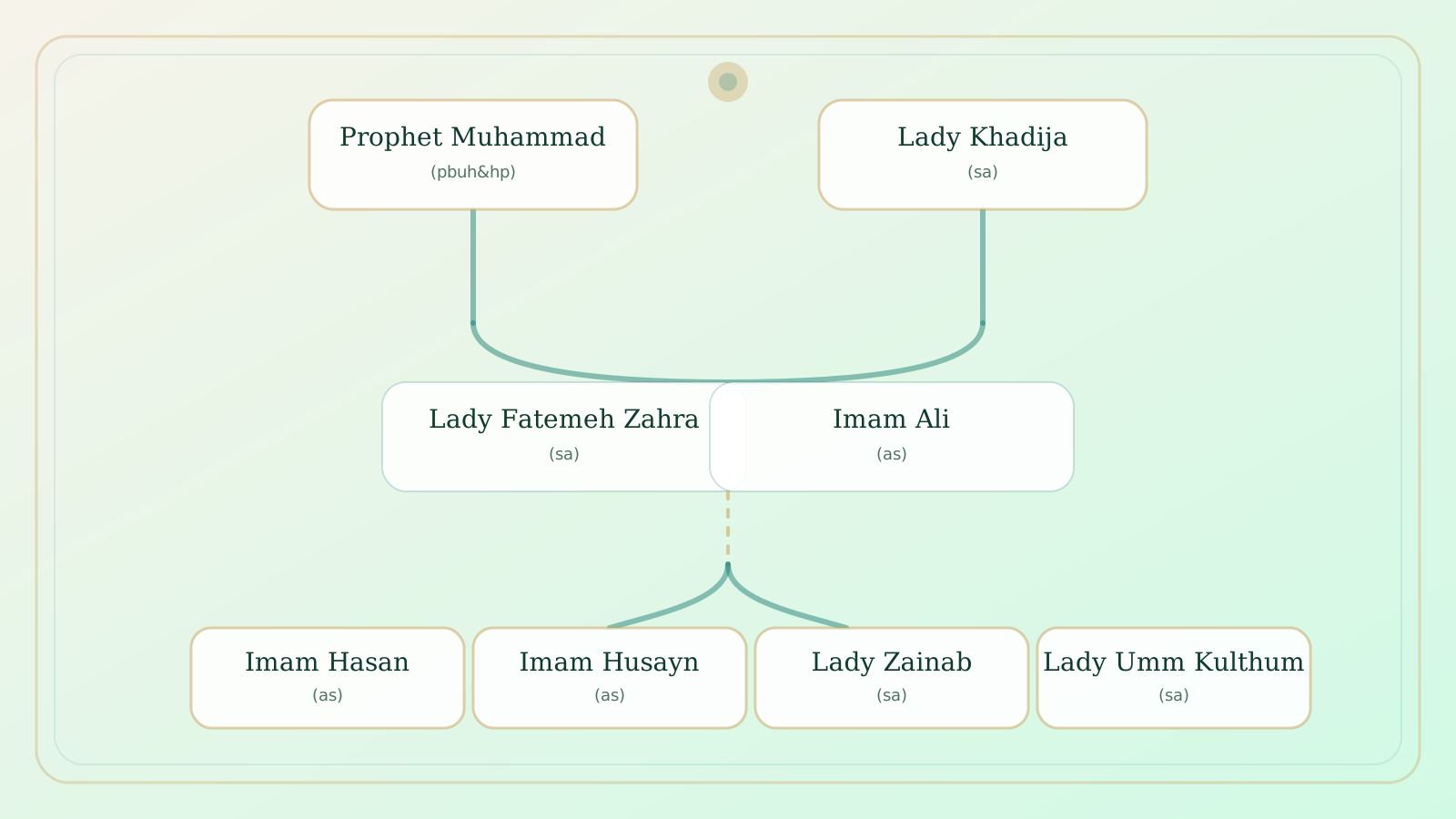
This blessed household is revered in Islamic memory. In Twelver Shi‘i devotion, the core Ahl al-Bayt are the Prophet Muhammad (pbuh&hp), Imam Ali (as), Lady Fatemeh (sa), Imam Hasan (as), and Imam Husayn (as), while the wider family of the household is also deeply honored.
"Fatemeh is a part of me; whoever pleases her pleases me, and whoever angers her angers me."
Explore More
Her Life Timeline
Explore the key events and milestones in the blessed life of Lady Fatemeh Zahra (sa).
View Timeline
Her Teachings & Legacy
Discover the profound wisdom and spiritual teachings that continue to inspire millions.
Read More
Kids Zone
Fun and engaging content for young hearts to learn about Lady Fatemeh (sa) and her family.
Visit Kids Zone